


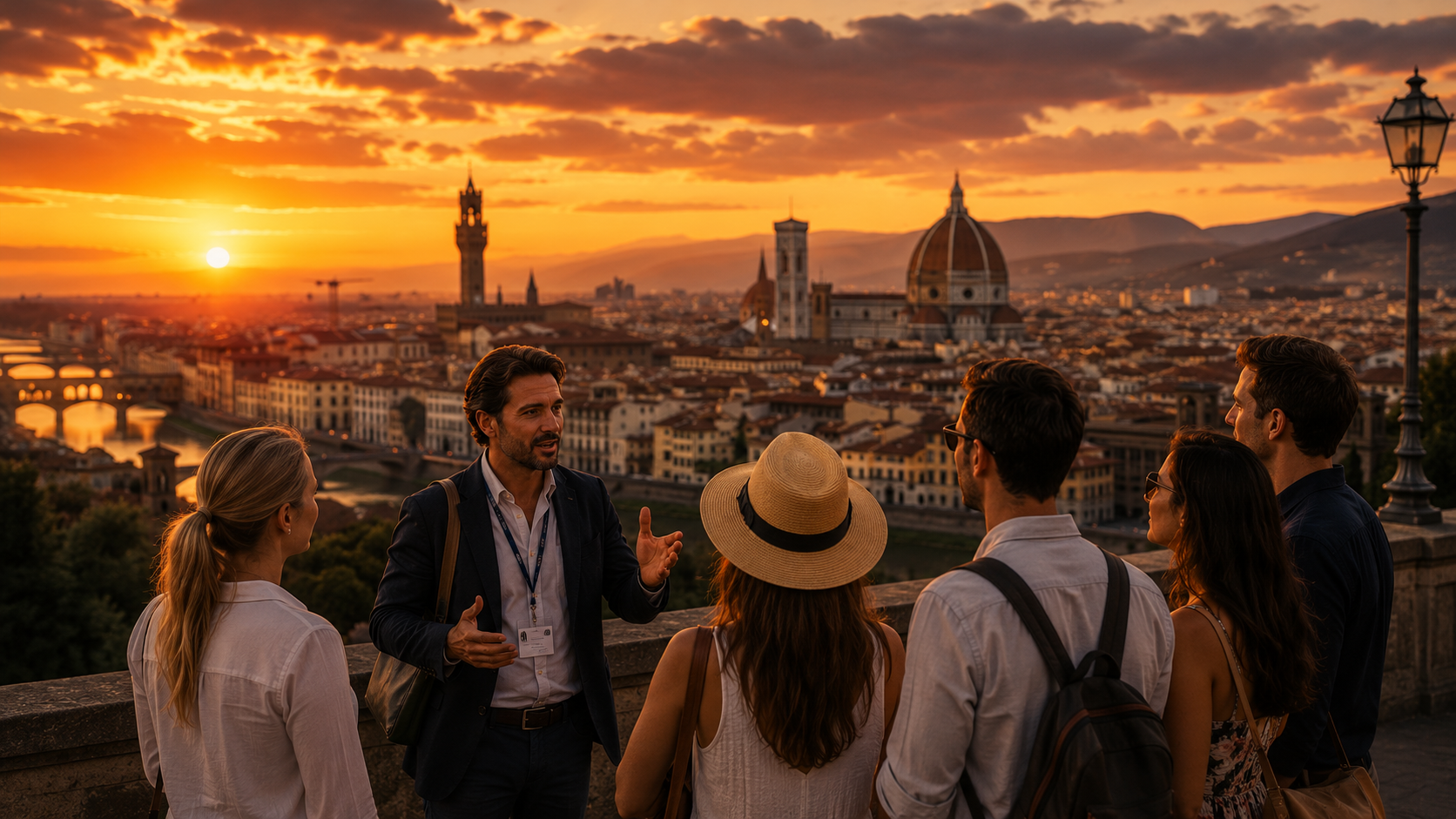
The right private guide is not simply someone who knows local facts. They should fit your interests, working language, walking pace and the needs of everyone in the party. Start by describing the experience you want, rather than asking only for a recommendation.
Define the purpose of the day
A city can be approached through art, architecture, family history, food, contemporary life or quieter neighbourhoods. If several countries are involved, first consider the overall journey; this guide to a private multi-country Europe trip can help connect destinations sensibly.
- List three to five subjects that genuinely matter to your group.
- Mention what you would rather avoid: crowds, long museum visits, stairs or early starts.
- Say whether you want an introduction, a deep dive, a family outing or neighbourhood orientation.
Check language and communication style
Language means more than fluency. Confirm the language of explanation, comfort with children’s questions, specialist vocabulary or a mixed-language group. Ask how the guide usually tells a story. Some travellers prefer conversation; others need concise context and room to observe independently.
Choose relevant expertise over broad claims
A guide may be particularly strong in art, Jewish heritage, urban history, design, markets, nature or family experiences. A specialist need not cover everything, but should state the limits of their subject and suggest an alternative where appropriate. For food-led days, discuss tastes and dietary needs in advance and review gastronomy route planning.
Agree pace, children’s needs and accessibility
Share children’s ages and any need for a stroller, wheelchair, rest stops, toilets, shade, fewer steps or seating. Never assume an attraction or route is accessible: entrances, surfaces, lifts, queues and conditions vary. Request a main plan and a shorter fallback. Children usually respond better to concrete activities, snacks and fewer stops than to a simplified adult lecture.
Decide where transport helps
Walking works well in a compact district. A car and driver can make distant sites, reduced mobility, luggage, heat or a full day more manageable, but it does not replace a well-designed route. See how a car with driver can be arranged, then clarify pick-up points, finish location, waiting time and a rain or traffic backup.
Provide a useful brief
Include dates, city, party size and ages, languages, interests, pace, limitations, hotel address, desired duration, transport and any tickets already held. Review formats in private tour examples and further ideas in the Belka articles. Belka Travel Concierge acts as a coordinator and concierge service, helping match these details to an appropriate format rather than forcing a standard template.
Discuss changes before the day
Ask what happens if a child is tired, weather changes, a site closes or the group runs late. A sound choice is one with shared priorities and a clear fallback.
Send a short brief through the contact page to discuss the guide, route and transport as one plan.