


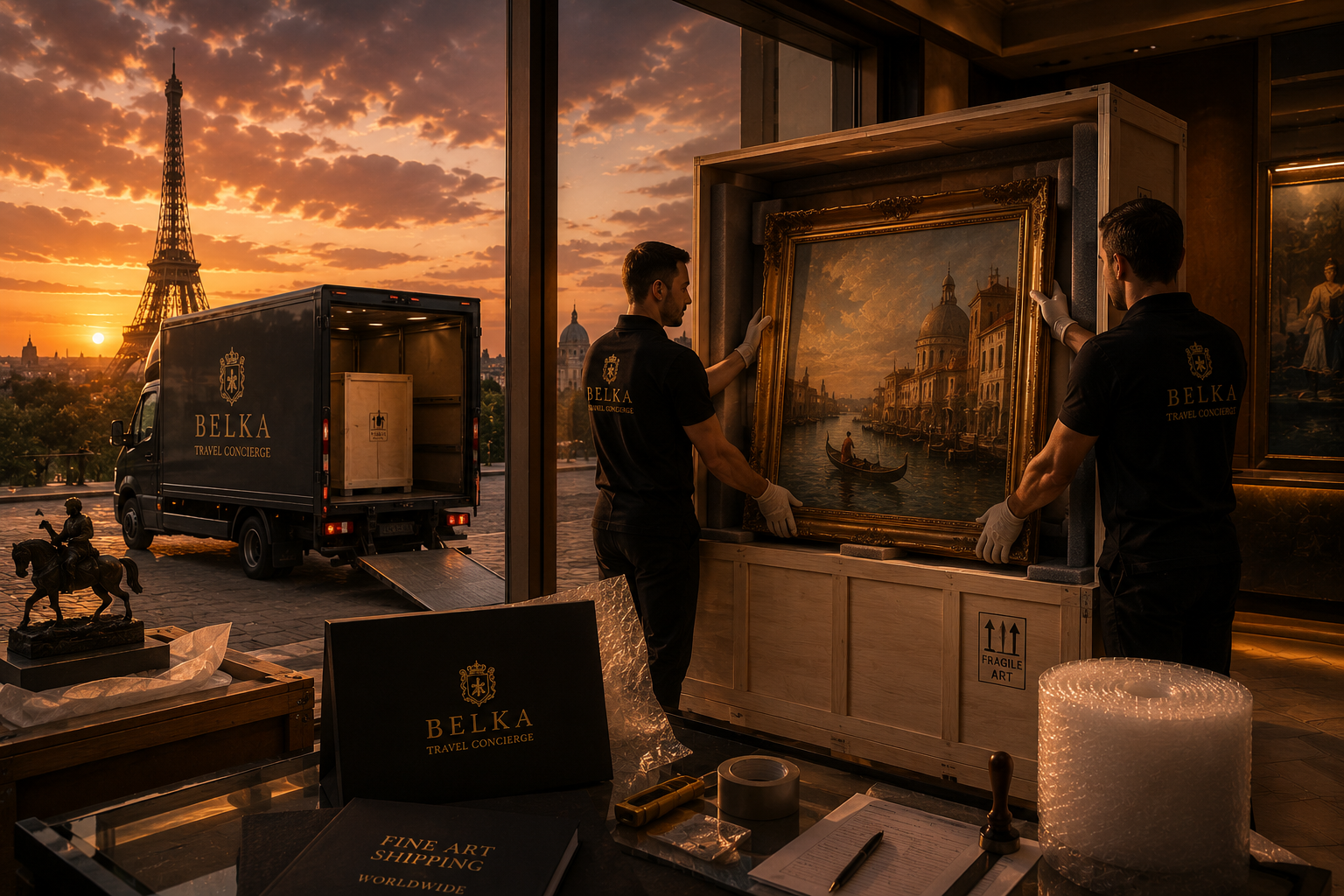
Door-to-door art logistics is a managed chain rather than a simple trip from collection to delivery. It starts with understanding the object and ends with a documented handover. The practical aim is to agree in advance on packaging, paperwork, transport, storage and who makes decisions at each point. Belka Travel Concierge acts as a coordinator and concierge service, helping clients organise information and communication.
1. Define the object and the brief
Start with a clear description: artist and title where known, medium, dimensions with and without a frame, weight, condition, fragile or protruding elements, and the value stated for transport purposes. Photos of the front, back, corners, signatures and existing marks are useful. For a complex move, outline the brief through art logistics coordination.
Record collection and delivery realities too: floor level, lift access, doorway width, vehicle access, permitted hours and named contacts. These details can change the handling plan substantially.
2. Match packaging to the artwork
Packaging should address impact, vibration, abrasion, dust and changes in the surrounding environment. A framed work may need corner protection, spacing and a rigid crate or case; a sculpture may require tailored supports that prevent movement. Materials should not be attached to a painted surface or otherwise create a risk of marking it.
Before sealing, photograph the condition and reconcile the packing list. Give each item in a multi-piece shipment a clear identifier that matches its documentation.
3. Establish the paperwork before choosing the route
Documents depend on the countries involved, the object’s status and age, and the reason for movement. A description, evidence of ownership or provenance, an invoice or value document, photographs and party details are often relevant. Some categories may need additional permissions. Requirements should be checked for the specific journey rather than assumed from a previous shipment.
Read the practical overview of art transport insurance and documents. If insurance is being considered, discuss it separately: declared value, exclusions, evidence requirements and notification procedure all matter.
4. Plan transport, handovers and contingencies
The right transport option depends on size, sensitivity, geography, timing and the number of handovers. A direct route can reduce handling, but may not always be appropriate or available. A sound plan names the people authorised to release and receive the piece, sets communication steps for disruption, and clarifies whether temporary holding may be needed.
Where collection or delivery connects with a personal trip, the meeting point can be coordinated alongside a transfer arrangement; passenger travel and artwork movement should still be planned as separate operations.
5. Arrange storage and final acceptance
If delivery cannot take place immediately, agree the temporary storage process in advance: access rules, item records, handling controls and release procedure. At delivery, inspect the outside of the package before opening it, compare labels with the list and photograph visible concerns. Unpack carefully and retain the packaging until the initial check is complete.
The recipient should receive the item list, relevant paperwork and a point of contact. For a related personal shipment, see the guide to international gift delivery with a concierge.
Information to send first
Provide photos, dimensions and condition notes; collection and delivery addresses; contacts and access limits; the intended delivery window; and all available ownership or object documents. State your priority as well: fewer handovers, a target date, specialised packaging or interim storage. For a focused discussion of the next steps, contact Belka Travel Concierge through the contact page.