


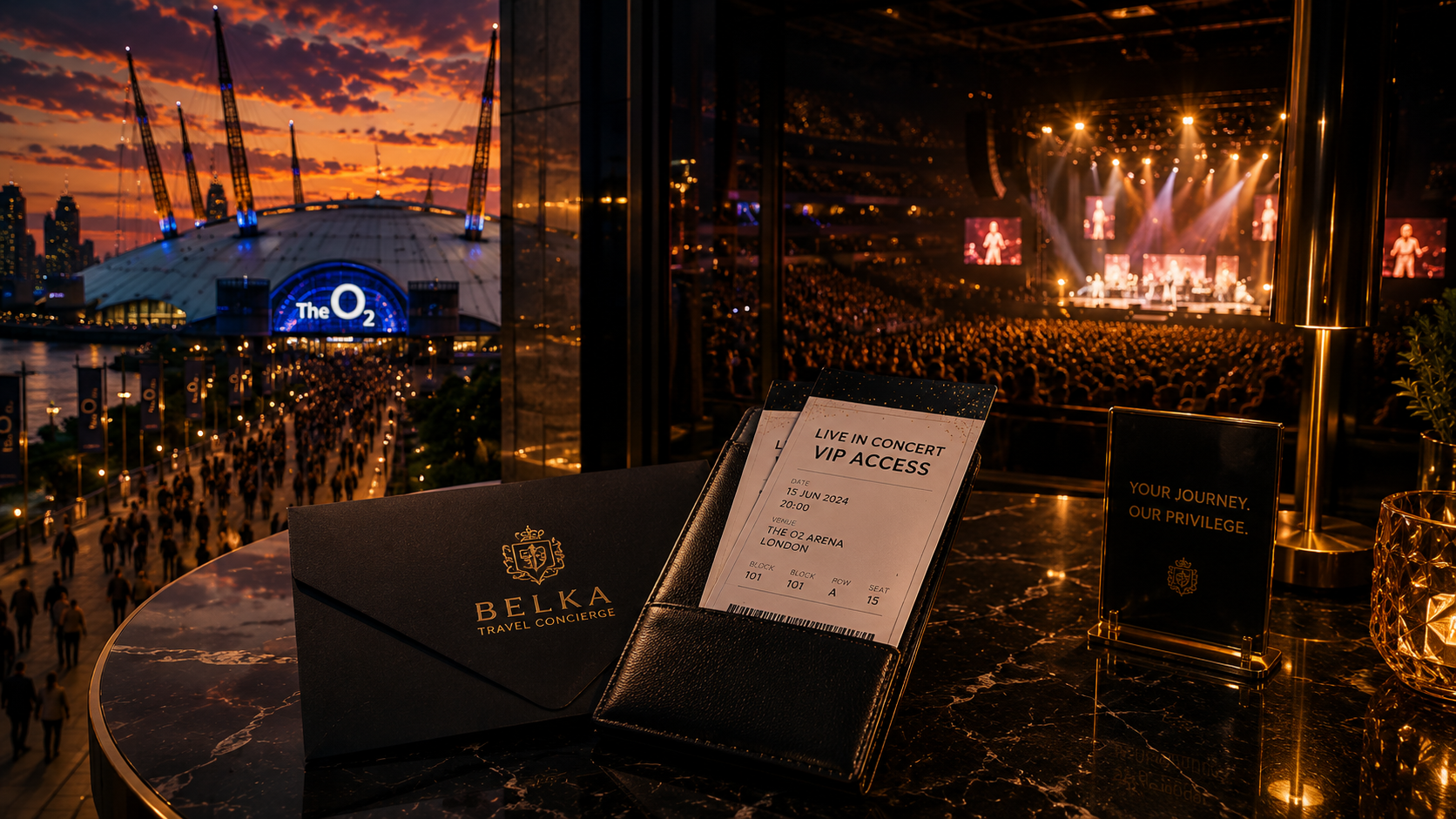
A football final trip works best when ticket access, guest data, hotel choices and movement plans are designed together. A premium seat alone does not solve arrival timing, stadium controls or a group leaving by different routes. Belka Travel Concierge can coordinate these moving parts into one practical guest journey.
Define the access, not just the label
“VIP ticket” is not a standard product. It may mean a higher-category seat, hospitality with a dedicated entrance and pre-match lounge, a box, a corporate package or an invitation subject to particular conditions. Do not assume that food, parking, player access, a post-match function or a transfer is included.
When using the event ticket coordination service, confirm the named category, seating principle, whether guests are seated together, inclusions, identity requirements, transfer restrictions and delivery method. For a group, adjacent seating needs an explicit request; the same category does not automatically mean the same row.
Build an accurate guest file early
Major finals may use personalised mobile tickets, ID checks, designated entry periods and bag restrictions. Collect each guest’s name exactly as shown on their travel document, mobile number for ticket delivery, nationality, accessibility needs and emergency contact. Avoid sharing ticket QR codes in open group chats, and do not rely on screenshots where the organiser uses a rotating code.
Agree in advance who may approve changes or ancillary services. For children, older travellers and guests with reduced mobility, ask about access routes, seating and any assistance process before the itinerary is finalised.
Choose accommodation for the operating plan
A hotel near the stadium can simplify the return after the match, yet road restrictions may make vehicle access difficult on the day. A central hotel often offers better dining and independent sightseeing options, but requires a more deliberate journey to the venue. Divide the rooming plan by arrival times, early check-in needs and whether every guest needs to stay in one property.
Large-event planning principles are similar across formats; the Formula 1 travel section illustrates why the confirmed route between airport, hotel, venue and meeting point matters as much as the booking itself.
Use a transport plan with a fallback
A car is not always the quickest match-day option. Security perimeters, traffic controls and pedestrian crowds can alter normal routes. A useful plan combines a pre-arranged guest transfer, approved drop-off and collection points, a manageable walking segment and an alternative if a flight is delayed or a road is closed.
- Set one meeting point before departure and another for after the final.
- Send written addresses as well as map pins.
- Nominate one person to monitor arrivals and decide whom to wait for.
- Consider separate vehicles or time windows when the party arrives on different flights.
Make the match-day brief simple
Every guest should receive one concise itinerary: meeting time, any dress expectation, coordinator contact, entrance or hospitality area, baggage guidance, post-match location and a procedure if phones cannot connect. Avoid filling the day with several fixed commitments. Security entry and the match itself already make timing sensitive. A pre-match meal should have a buffer; a late plan should allow guests to leave independently.
Prepare for ordinary disruptions
Most problems are manageable if anticipated: a delayed flight, substituted guest, low phone battery, poor weather, a lost ticket or a separated party. Decide who handles each issue and keep key information available offline. For further ideas on linking access with travel operations, read the guide to tickets and travel logistics and browse the Belka Travel Concierge articles.
Start with the date, city, guest count and ages, departure cities, preferred access format and accommodation priorities. Then contact Belka Travel Concierge to discuss a coordinated, realistic plan.