


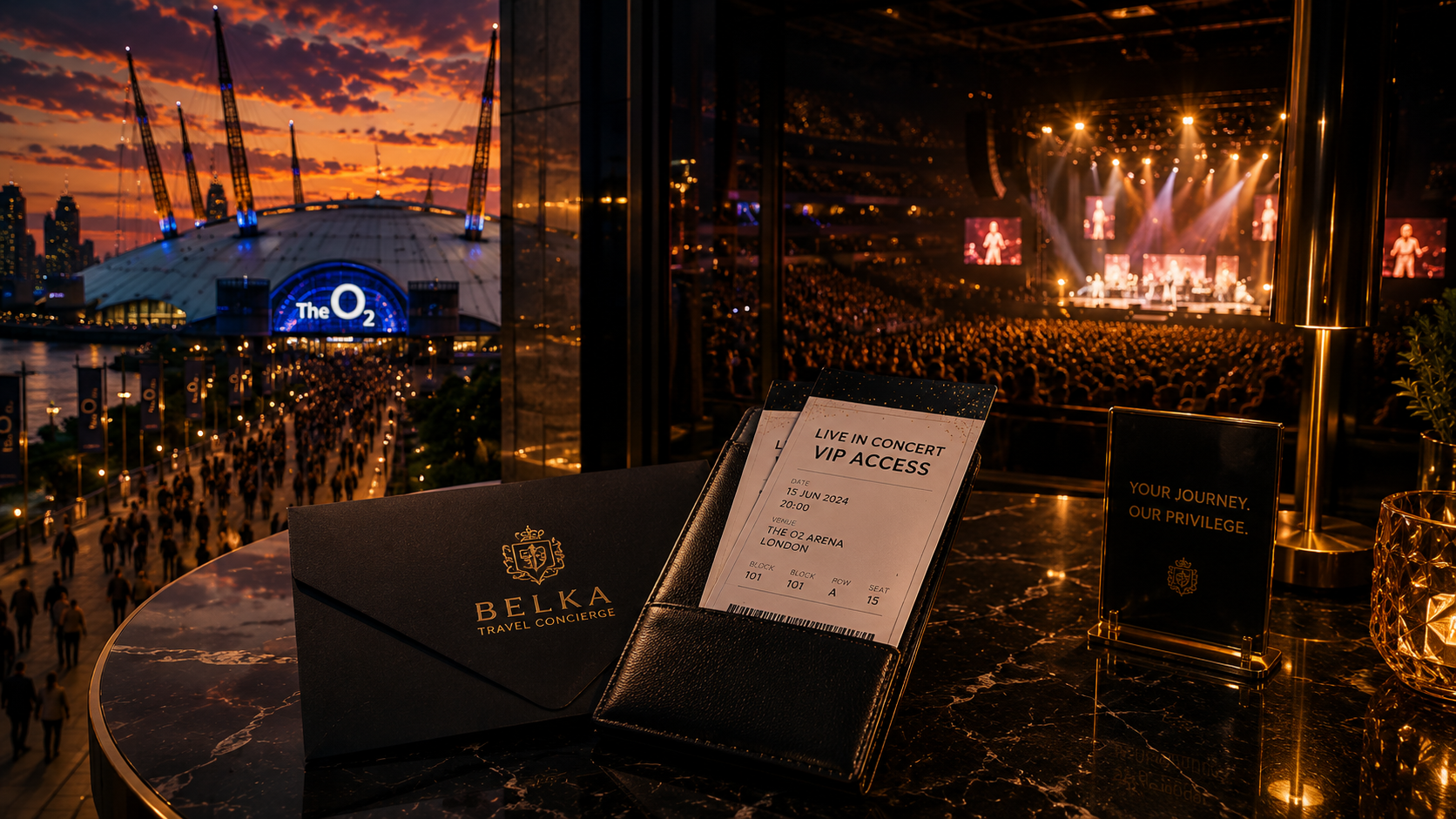
A concert, race, match or private event day needs a Plan B not because failure is expected, but because small disruptions can combine quickly. Confirm the route, entry point, tickets, communications and trip back before leaving, so decisions are based on information rather than pressure.
Create one practical event-day brief
The day before, make a single note that works offline: venue address, official start and recommended arrival time, section or access zone, order reference, organiser contacts and a meeting point. Compare the ticket details with the guidance on ticket authenticity and delivery. Do not share QR codes or identity documents in group chats.
- Open any required official app in advance and save a readable copy of the instructions.
- Identify two possible entrances, or at least an official information point.
- Agree on an outside meeting place and a time after which each person proceeds independently.
If you are running late
Check whether opening times, entrances or late-admission rules have changed; do not rely solely on unofficial social posts. Send companions a short update: your location, mode of travel and when you will update them again. Do not ask a driver to break rules or try to cut through restricted areas.
For a trip involving several events, map the critical timings beforehand, as outlined in this multi-city events travel calendar. If arrival becomes uncertain, choose the nearest safe drop-off point, confirm the current entrance, and then adjust the route.
Rescheduling, cancellation and a new entrance
For a postponement or venue change, use communications from the venue, organiser or ticket operator. Keep a screenshot with its date and time, but do not change flights, accommodation or tickets until you know precisely what changed: date, time, city, venue, access category or the conditions attached to the existing ticket.
A new entrance may mean a longer perimeter walk and another security queue. At large sporting weekends, access zones, shuttles and road closures matter; review the practical context on the Formula 1 events page when your event has a comparable scale. Carry only what you need, since bag and prohibited-item rules can vary between venues.
When mobile service fails
Poor signal should not cost you your ticket or your group. Charge your phone and power bank, download the local map area, and write down the accommodation address and a local contact. Agree on a simple rule: if communication fails, do not keep circling the venue; wait for an agreed period at the planned point.
If a ticket lives only in an app, do not assume there will be reliable Wi-Fi at the gate. Sign in early, update the app at home or at the hotel, and check whether internet access is needed to activate it. If there is an issue, approach official box-office or information staff calmly with the order details and identification where the terms require it.
Make the return journey part of the plan
Choose your way back before the final exit: a pre-arranged car, public transport with a clear route, or a walking meeting point on a permitted street. When discussing transfer coordination, provide the address, passenger count, luggage, child-seat or mobility needs and preferred departure window—not just the arena name.
You do not always need to leave with the densest crowd; waiting briefly in an authorised area can make collection easier. Do not enter a vehicle when the driver details do not match the confirmed booking, and let someone know once you have left the venue.
Information to share in advance
Belka Travel Concierge is a coordinator and concierge service. Helpful details include the date and venue, group size, languages, mobility considerations, before-and-after addresses, and whether speed, a simpler route or flexibility to wait matters most. Explore relevant requests through event ticket support and further planning guidance in the articles section.
Send those essentials the day before and ask for your specific risks to be checked. For a measured final review, use the contact page; it is easier to settle the fallback plan before reaching a closed gate.