


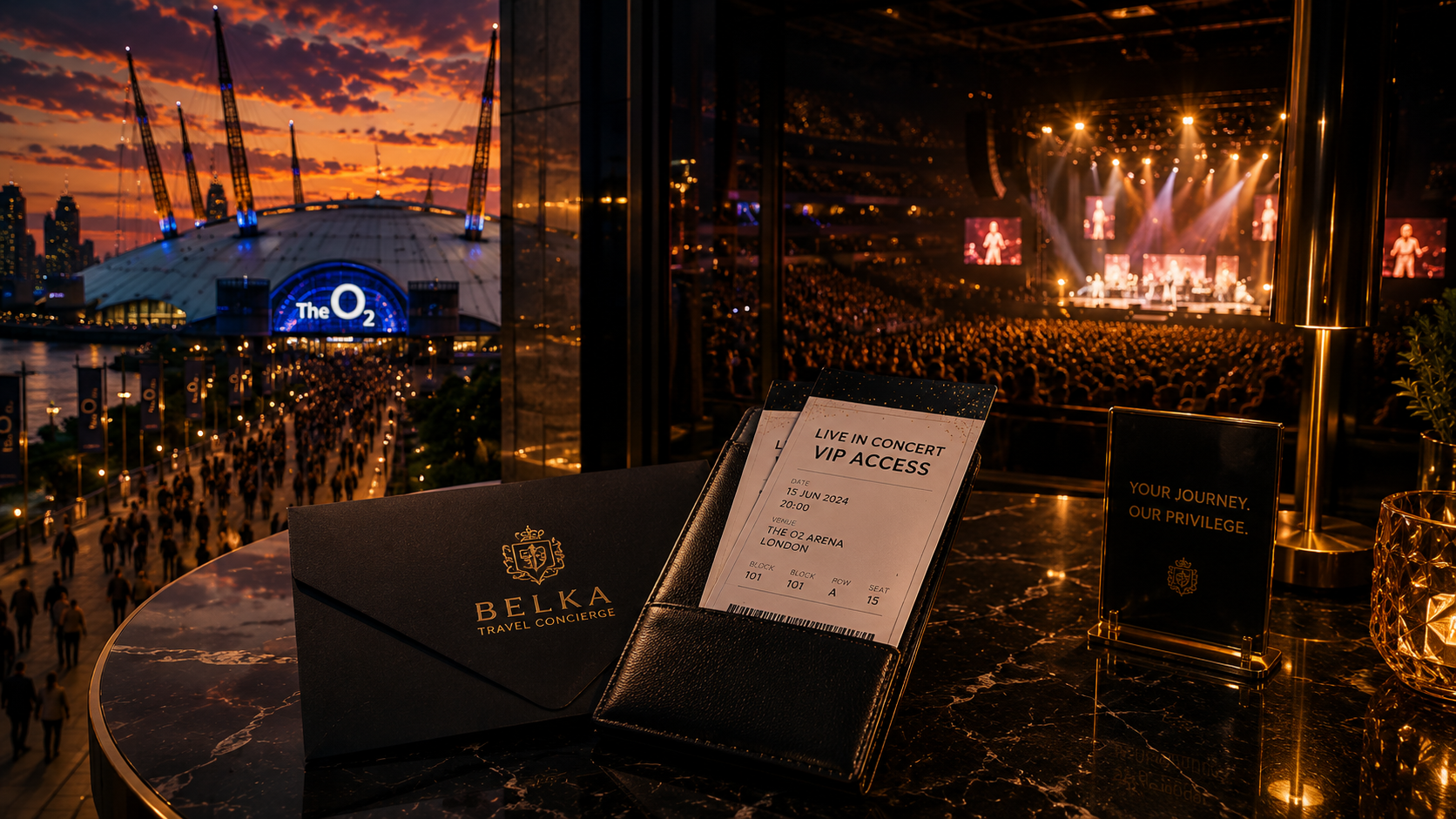
A concert trip is easier to enjoy when the ticket, hotel area, venue access and journey home are planned as one connected itinerary. Belka Travel Concierge acts as a coordinator and concierge service, helping you compare options, clarify priorities and prepare sensible contingencies.
Set the trip brief before choosing a ticket
Share the city and date, or a workable date range; number of guests; departure city; and a budget direction. Explain what matters most: a particular artist, proximity to the stage, a clear view, easy departure, or a relaxed overnight stay. Mention mobility needs, ages, luggage, arrival timing and hotel preferences at the outset.
If the event is not yet fixed, the approach used for event ticket requests can help structure the decision. Seat categories should be compared alongside sector location, likely sightlines, access route and the venue’s event-specific conditions.
Choose seats for the experience you want
Closer is not automatically better. A standing area involves crowd density, height differences and time on your feet. Reserved seating raises questions about angle to the stage, row height and proximity to aisles. Hospitality or suite options should be assessed by what access and inclusions actually mean, rather than by the label alone.
- For a first visit, clear wayfinding and a simple exit may matter more than the nearest section.
- Groups should agree whether view, proximity or budget is the shared priority.
- Do not rely on an old seating map: stage layouts and entrance arrangements can change.
Make the hotel part of the route
Do not judge accommodation only by map distance. Consider late-night transport links, late check-in, luggage arrangements, the character of the area and the route from the station or drop-off point. A hotel farther away but on a direct route can be more practical than one near a venue affected by crowd controls.
Build in the whole rhythm of the trip: early arrival, time to reset, dinner, a late return and next-day departure. The same comparison discipline applies across live events; our guide to Formula 1 hospitality versus grandstands explains why access and practical comfort deserve scrutiny.
Plan entry and the approach to the venue
Keep tickets and order details available offline. Check the named attendee, presentation format, bag policy, permitted items and door-opening information through the event’s official communications. Allow a buffer for security, queues and finding the correct gate. For a group, choose a recognisable meeting point outside the main pedestrian flow.
A transfer arrangement can be coordinated for the airport, rail station or hotel. Provide flight or train details, passenger count, luggage, child-seat needs where relevant and your preferred pickup window. On the day, still monitor carrier and venue updates yourself.
Design the journey home and a fallback
When the show ends, many people leave at once. Decide whether to wait at a nearby venue, walk to a quieter pickup location or use public transport. Keep phones charged, save the accommodation address offline, and agree on contacts and a meeting point in case the party separates.
A useful fallback covers a delayed arrival, changed programme, weather disruption or loss of connectivity. It may mean leaving earlier, identifying another route to the hotel and agreeing who can make a decision if plans change. Browse further event travel articles when building a multi-stop or high-demand weekend.
What to send to your coordinator
Put dates, cities, guest count and ages, preferred ticket categories, adjacent-seat requirements, arrival details, hotel or hotel criteria, luggage, accessibility needs and flexibility in one message. Also state non-negotiables, such as no overnight connections, limited walking, no standing places or no early checkout.
As a practical next step, send that short brief through the Belka Travel Concierge contact page. The coordinator can turn it into a clear sequence of choices, checks and backup options.